
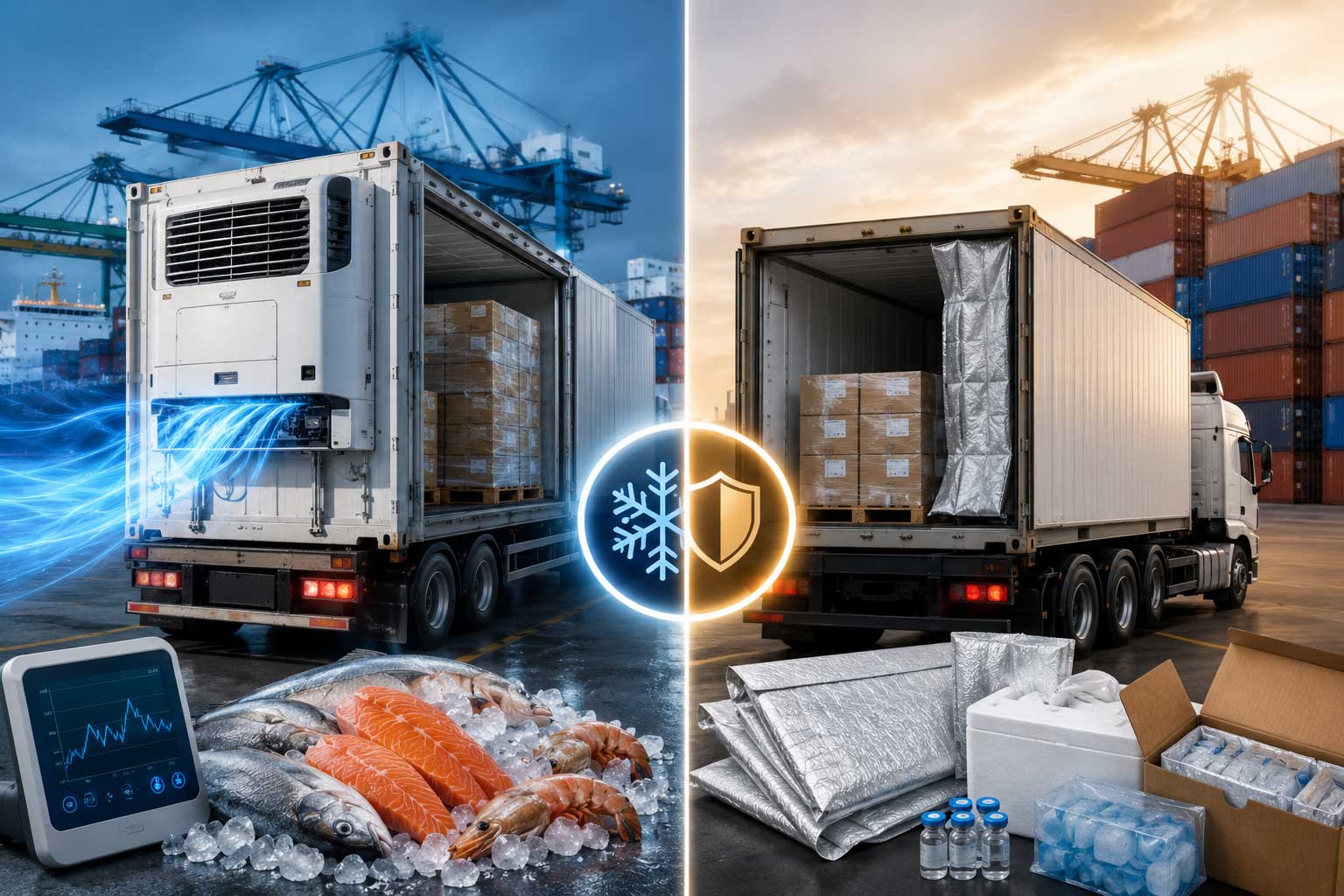
When container ships dock at major ports, a high-stakes countdown begins. For temperature-sensitive cargo -ranging from high-value pharmaceuticals and fresh produce to specialty seafood – the leg between the port terminal and the regional cold storage facility (drayage) is often the most vulnerable segment of the supply chain.
At the port, a single bottleneck, long terminal gate line, or Customs inspection can transform a routine 20-mile transport into a multi-hour ordeal. To protect high-risk freight during this critical transit window, logistics managers must make a foundational decision: Active cooling or passive cooling?
Understanding the operational differences, cost trade-offs, and risk profiles of both setups is essential for safeguarding your cargo and bottom line.
Defining the Contenders
1. Active Cooling: Continuous Powered Temperature Control
Active cooling relies on mechanical or electrical refrigeration units to actively generate cold air and circulate it around the cargo throughout transit.
In port drayage, this typically means mounting a diesel-powered Genset (Generator Set) directly onto the refrigerated container chassis or underslung on the trailer.
- How it works: The Genset acts as a portable power plant, fueling the container’s internal refrigeration unit (reefer unit) continuously—even when disconnected from port power or a vessel’s grid.
- Best for: Long drayage routes, high-risk pharmaceuticals, fresh produce with high respiration rates, high ambient outdoor temperatures, and unpredictable port dwell times.
2. Passive Cooling: Thermal Barrier Protection
Passive cooling relies on insulated packaging, phase-change materials (PCMs), gel packs, or dry ice to buffer cargo against ambient temperature changes. It does not actively generate cold air during transport; instead, it slows down heat transfer.
- How it works: Cargo is pre-chilled to target temperatures and wrapped in thermal blankets, insulated container liners, or specialized vacuum-insulated panels (VIPs) to maintain thermal mass.
- Best for: Ultra-short drayage distances, frozen goods with high thermal mass, stable ambient weather, or short-haul transit with guaranteed port clearance.
Head-to-Head Comparison: Drayage Scenarios
| Feature / Scenario | Active Cooling (Genset Equipped) | Passive Cooling (Insulated/PCM) |
| Port Congestion Resilience | High. Cargo stays refrigerated indefinitely as long as the Genset has fuel. | Low. Protective hold times expire; delays lead to temperature excursions. |
| Temperature Range Support | Precise control across both frozen and ambient-chilled (+/- 0.5°C). | Best for maintaining deep freeze or short-term thermal buffering. |
| Capital & Operational Cost | Higher equipment leasing fees, fuel costs, and maintenance overhead. | Lower transport costs; relies primarily on thermal packaging investment. |
| Equipment Availability | Requires specialized Genset chassis and certified reefer drivers. | Compatible with standard dry drayage chassis and drivers. |
| Environmental Compliance | Subject to port emissions standards (e.g., CARB rules in California). | Zero direct tailpipe emissions from auxiliary units. |
3 Critical Factors When Making Your Choice
1. The “Port Dwell” Variable
Port delays are inherently unpredictable. A driver stuck at a container terminal gate for four hours during a summer heatwave poses zero risk to an active Genset setup, as the container unit continues running.
Conversely, passive insulation has a finite thermal lifespan. If ambient heat penetrates the container during extended dwell times, the core temperature of the freight begins to rise—often leading to total shipment rejection at the receiving warehouse.
2. Cargo Sensitivity & Respiration Rates
Not all cold freight behaves the same:
- Frozen Meat/Ice Cream: High thermal mass means these items lose temperature slowly, making short-distance passive drayage feasible under ideal conditions.
- Biologics, Vaccines, & Fresh Produce: These items require tight, active climate control. Fresh produce continues to respire and generate heat inside the container, which passive insulation cannot dissipate. Active airflow is non-negotiable.
3. Regulatory Compliance & Audit Trails
For FDA-regulated food and GDP-compliant biopharmaceuticals, proving continuous temperature control is legally required. Active cooling systems paired with modern IoT telematics provide uninterrupted, real-time temperature logs from port offload to warehouse gate—providing an airtight audit trail for compliance claims.
Best Practices for High-Risk Reefer Drayage
- Match Setup to Risk Profile: Reserve passive cooling for low-risk, short-run frozen goods during mild weather. Default to active Genset cooling for all pharma, fresh produce, and high-value cargo.
- Verify Pre-Cooling Procedures: Neither setup can pull down hot cargo effectively during a short drayage run. Ensure ocean reefers are properly pre-chilled prior to gate-out.
- Monitor Genset Fuel Levels: For active setups, mandate that drayage carriers verify Genset fuel levels before taking possession of the container at the terminal.
- Deploy Real-Time Telematics: Utilize active tracking devices inside or outside the container to monitor real-time temperature, humidity, and location throughout the drayage leg.
Final Thoughts
In port drayage, saving a few hundred dollars on passive transport packaging can quickly backfire into a six-figure cargo loss if a vessel handoff stalls. When moving high-risk freight, active Genset cooling offers the insurance policy, flexibility, and precision climate control needed to navigate modern port volatility safely.