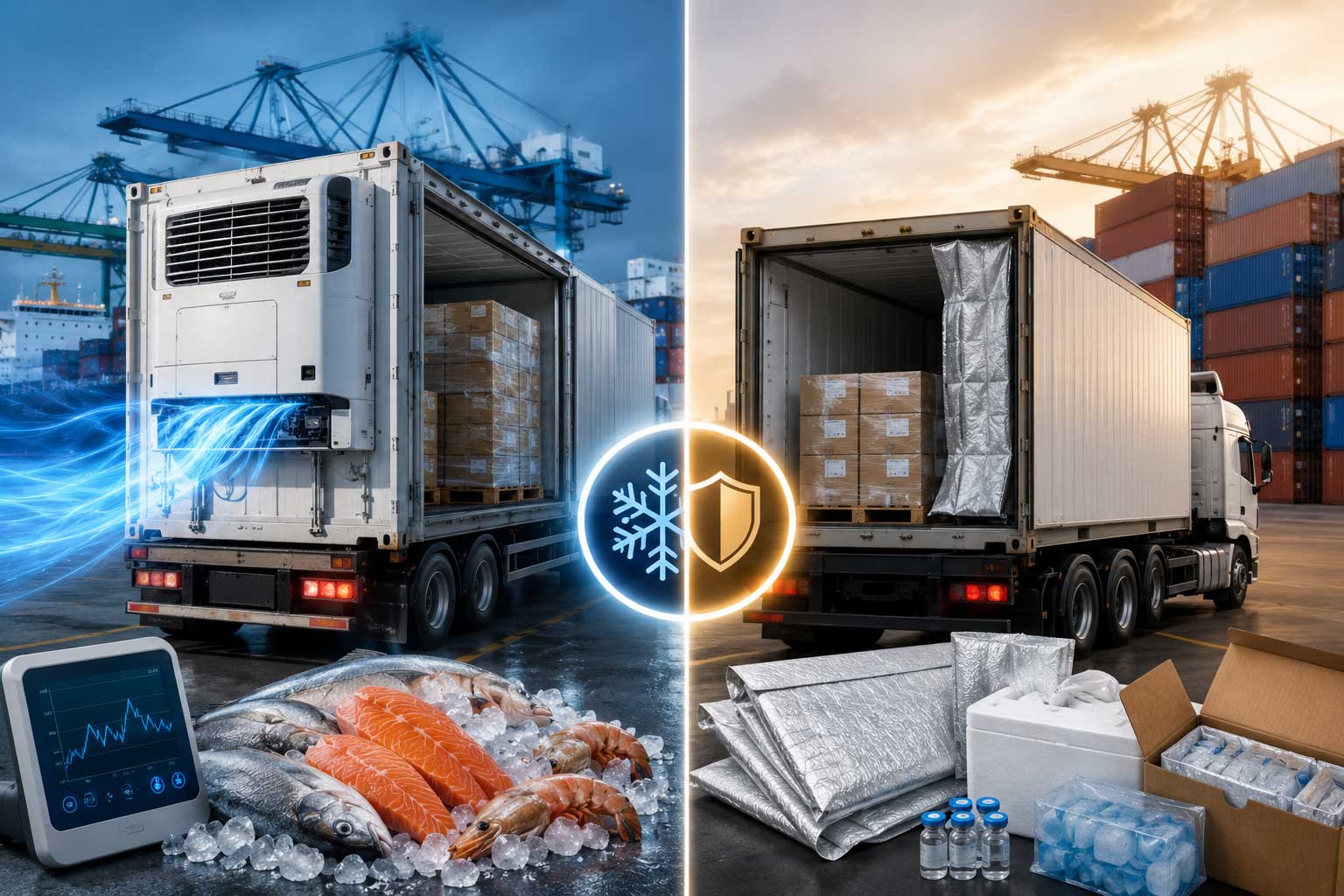
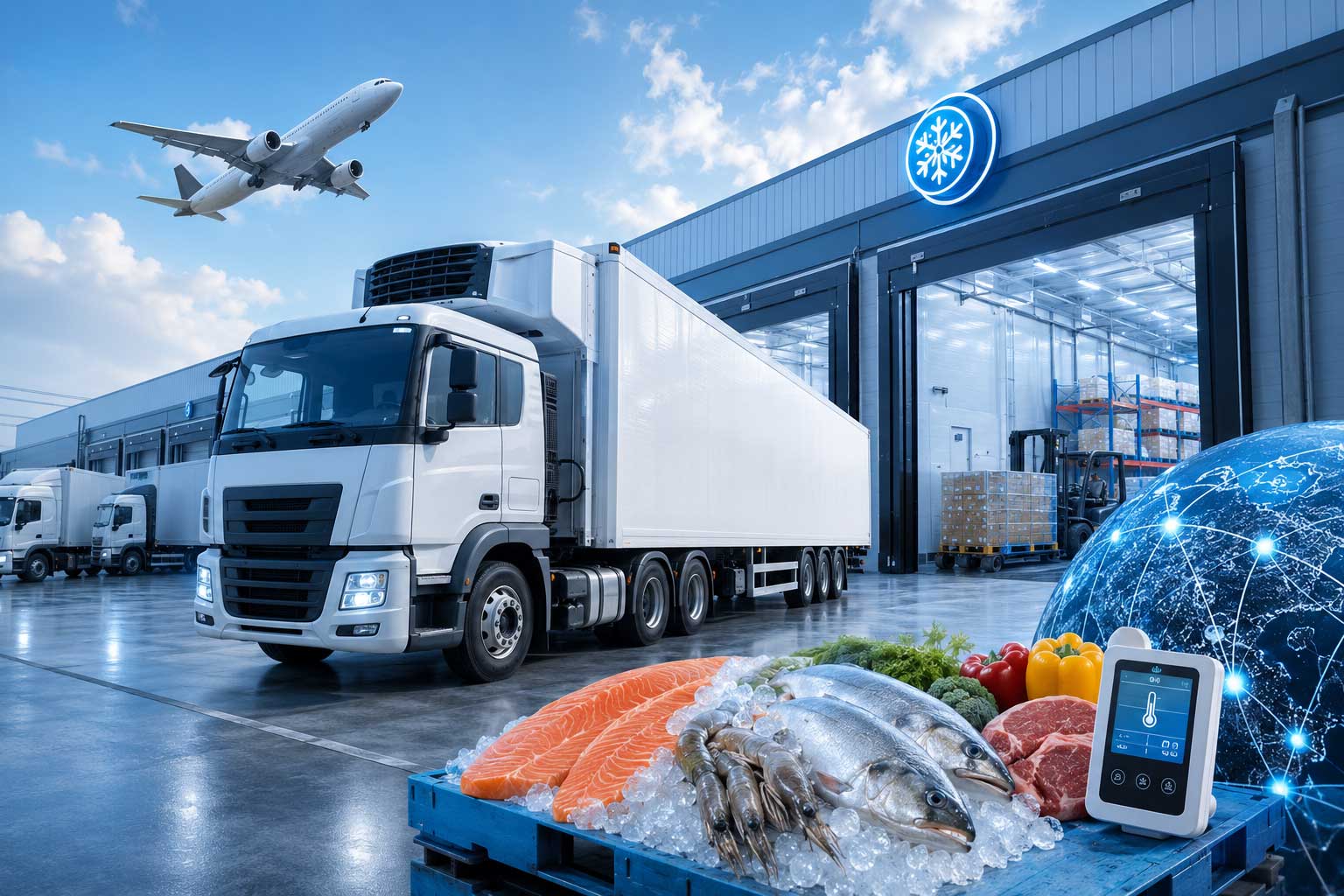
Cold chain logistics plays a critical role in moving temperature-sensitive products safely across the United States. From fresh seafood and frozen foods to pharmaceuticals and other perishable products, businesses depend on a reliable cold chain to maintain product quality from the point of origin to the final destination.
However, managing cold chain logistics in the USA is far more complex than simply transporting products in refrigerated trucks. Products may pass through cold storage facilities, distribution centers, ports, refrigerated vehicles, and last-mile delivery networks before reaching customers. At every stage, the required temperature must be maintained and monitored.
A single temperature excursion, equipment failure, or transportation delay can affect product quality, create food safety concerns, increase waste, and result in significant financial losses.
Understanding the major challenges, available solutions, and industry best practices can help businesses build a more reliable and efficient cold chain.
What Is Cold Chain Logistics?
Cold chain logistics is the process of storing, handling, transporting, and distributing temperature-sensitive products within a controlled temperature environment.
The goal is to maintain the required temperature range throughout the entire supply chain.
A typical cold chain may include:
- Temperature-controlled processing and packaging
- Refrigerated or frozen storage
- Cold storage warehouses and distribution centers
- Refrigerated trucking and transportation
- Temperature monitoring during transit
- Loading and unloading under controlled conditions
- Last-mile refrigerated delivery
Different products require different temperature conditions. Fresh produce, seafood, dairy products, frozen foods, meat, pharmaceuticals, and biological products all have specific storage and transportation requirements.
Maintaining these conditions continuously is essential because even a temporary break in the cold chain can affect product safety, freshness, shelf life, or effectiveness.
Why Is Cold Chain Logistics Important in the USA?
The United States has a vast and highly interconnected supply chain. Temperature-sensitive products often travel hundreds or thousands of miles between farms, processing facilities, ports, warehouses, retailers, restaurants, healthcare facilities, and consumers.
This makes reliable cold chain transportation in the USA essential.
For the food industry, cold chain logistics helps preserve freshness, reduce spoilage, and maintain food safety. Seafood, meat, dairy products, fruits, vegetables, and frozen foods all depend on carefully controlled storage and transportation.
The pharmaceutical and healthcare industries also rely heavily on temperature-controlled logistics. Certain medicines, vaccines, biological materials, and healthcare products must remain within specified temperature ranges throughout transportation and storage.
An effective cold chain therefore supports several important objectives: protecting product integrity, reducing waste, extending shelf life, meeting regulatory requirements, and ensuring products reach customers in the expected condition.
Major Challenges in Cold Chain Logistics in the USA
Despite advances in refrigeration and logistics technology, maintaining an uninterrupted cold chain remains challenging.
1. Maintaining Consistent Temperatures
Temperature control is the foundation of cold chain logistics.
Products may move through several environments during their journey, including refrigerated warehouses, trucks, loading docks, distribution centers, and retail facilities. Every transfer creates an opportunity for temperature fluctuations.
Even when a refrigerated vehicle is functioning properly, temperature variations can occur because of frequent door openings, incorrect loading practices, poor airflow, refrigeration equipment problems, or extended loading and unloading times.
For sensitive products, even relatively short temperature excursions may affect quality.
The solution is not simply refrigeration but continuous temperature management throughout the entire logistics process.
2. Long Transportation Distances
The geographic size of the United States presents another challenge.
A shipment may travel across multiple states before reaching its destination. Long-distance transportation increases exposure to potential disruptions such as:
- Traffic congestion
- Severe weather
- Mechanical breakdowns
- Route changes
- Driver delays
- Warehouse congestion
- Delivery appointment issues
For refrigerated and frozen products, delays are particularly important because refrigeration systems must continue maintaining the required conditions throughout the extended transit period.
Careful route planning and real-time shipment visibility can help reduce these risks.
3. Refrigeration Equipment Failure
Cold chain logistics depends heavily on reliable equipment.
Refrigerated trucks, trailers, containers, cold rooms, freezers, and warehouse refrigeration systems must operate continuously within required specifications.
A mechanical failure can quickly create a temperature excursion, particularly during hot weather or long-distance transportation.
Preventive maintenance is therefore essential. Logistics providers should regularly inspect refrigeration systems, sensors, door seals, insulation, power systems, and backup equipment.
Real-time temperature alerts can also help teams respond quickly when conditions move outside acceptable limits.
4. Limited End-to-End Visibility
One of the biggest challenges in traditional cold chains is limited visibility once a shipment leaves a facility.
Without real-time monitoring, businesses may not know that a temperature deviation has occurred until the shipment reaches its destination.
Modern cold chain management increasingly uses connected monitoring technologies to track conditions throughout transportation.
Depending on the shipment, monitoring systems may track:
- Temperature
- Humidity
- Vehicle or container location
- Door openings
- Transit delays
- Refrigeration performance
Better visibility allows logistics teams to identify problems earlier and take corrective action before product quality is compromised.
5. Regulatory and Compliance Requirements
Cold chain logistics must operate within various food safety, transportation, pharmaceutical, and product-handling requirements.
The exact compliance obligations depend on the type of product being transported.
Food products, for example, require appropriate sanitary transportation practices and temperature controls. Pharmaceutical products may require stricter documentation, monitoring, handling procedures, and traceability.
Businesses should establish clear standard operating procedures and maintain accurate records for temperature monitoring, sanitation, equipment maintenance, and product handling.
Compliance should be integrated into daily operations rather than treated as a separate administrative task.
6. Rising Operating Costs
Cold chain logistics generally costs more than conventional transportation because it requires specialized infrastructure and equipment.
Major expenses can include:
- Refrigerated vehicles and containers
- Fuel and energy
- Cold storage facilities
- Monitoring technology
- Equipment maintenance
- Specialized packaging
- Trained personnel
Energy consumption is particularly significant because refrigeration systems may need to operate continuously.
Improving route efficiency, warehouse utilization, load planning, and energy management can help businesses control costs without compromising temperature integrity.
7. Last-Mile Delivery Challenges
The final stage of the cold chain can be one of the most difficult.
Products may remain well controlled during long-distance transportation but become exposed to temperature fluctuations during final delivery.
Multiple delivery stops, frequent door openings, traffic delays, inadequate packaging, and unsuccessful delivery attempts can increase risk.
Businesses handling temperature-sensitive last-mile deliveries need suitable vehicles, insulated packaging where appropriate, optimized delivery routes, and clear procedures for handling delays.
Solutions for More Reliable Cold Chain Logistics
Addressing cold chain challenges requires a combination of technology, infrastructure, planning, and operational discipline.
Real-Time Temperature Monitoring
Real-time monitoring is becoming increasingly important in modern temperature-controlled logistics.
Sensors and connected monitoring systems can provide continuous information about shipment conditions.
If temperatures move outside predetermined limits, alerts can allow logistics teams to investigate and respond quickly.
This provides a major advantage over systems that only review temperature records after delivery.
Historical temperature data can also help businesses identify recurring problems and improve future operations.
IoT and Connected Cold Chain Technology
Internet of Things (IoT) technologies are improving visibility across cold chain networks.
Connected sensors can collect and transmit information about temperature, humidity, location, equipment performance, and other conditions.
This information allows logistics teams to monitor shipments remotely and make faster operational decisions.
When integrated with transportation or warehouse management systems, IoT data can create greater end-to-end visibility across the supply chain.
Route Optimization
Efficient routing helps reduce both delivery time and cold chain risk.
Modern route planning systems can consider factors such as distance, traffic patterns, delivery windows, vehicle capacity, and road conditions.
Reducing unnecessary travel time can lower fuel consumption while also reducing the amount of time temperature-sensitive products spend in transit.
Contingency routes should also be prepared for critical shipments in case unexpected disruptions occur.
Reliable Cold Storage Infrastructure
Cold storage facilities are a critical link between production, transportation, distribution, and final delivery.
Modern facilities should maintain stable temperature zones, reliable backup power, appropriate airflow, accurate monitoring systems, and efficient loading procedures.
Warehouse layout also matters.
Poorly organized storage can increase handling time and expose products to warmer environments unnecessarily. Efficient inventory management helps products move through the facility quickly while maintaining proper temperature conditions.
Preventive Equipment Maintenance
Waiting for refrigeration equipment to fail can be costly.
Preventive maintenance programs help identify problems before they cause temperature excursions.
Maintenance programs should cover refrigeration units, temperature sensors, vehicle insulation, door seals, backup generators, electrical systems, and other critical components.
Maintenance records can also help identify recurring equipment problems and support better replacement planning.
Best Practices for Cold Chain Logistics in the USA
Building a reliable cold chain requires consistent procedures across every stage of the supply chain.
1. Define Product-Specific Temperature Requirements
Not all cold chain products require the same conditions.
Businesses should clearly define the acceptable temperature range for each product and ensure that transportation providers, warehouses, and distribution partners understand those requirements.
Handling instructions should be documented and communicated throughout the supply chain.
2. Pre-Cool Vehicles and Storage Areas
Loading temperature-sensitive products into a warm trailer or storage area can create immediate temperature fluctuations.
Refrigerated vehicles, containers, and storage spaces should be brought to the required operating temperature before loading when appropriate.
This helps maintain stable conditions from the beginning of transportation.
3. Minimize Loading and Unloading Time
Loading docks are common points where cold chain integrity can be compromised.
Products should not remain unnecessarily exposed to ambient temperatures.
Coordinating warehouse teams, drivers, documentation, and loading schedules can reduce waiting times and improve temperature control during transfers.
4. Use Continuous Temperature Monitoring
Continuous monitoring provides a more complete picture than occasional manual temperature checks.
Temperature records can help businesses verify whether required conditions were maintained throughout transportation.
For high-value or highly sensitive shipments, real-time alerts provide an additional layer of protection.
5. Train Employees Regularly
Technology alone cannot protect the cold chain.
Drivers, warehouse employees, loaders, supervisors, and logistics coordinators all need to understand proper cold chain procedures.
Training should cover temperature requirements, equipment operation, loading practices, sanitation, monitoring systems, documentation, and emergency procedures.
6. Develop Contingency Plans
Unexpected events are unavoidable in logistics.
Businesses should have clear procedures for responding to refrigeration failures, vehicle breakdowns, power outages, severe weather, road closures, and major transportation delays.
Backup vehicles, alternative cold storage facilities, emergency power systems, and escalation procedures can help reduce product losses during disruptions.
7. Improve Supply Chain Visibility
Cold chain partners should be able to share relevant information efficiently.
Better communication between suppliers, carriers, warehouses, distributors, and customers reduces uncertainty and improves response times.
Integrated digital systems can provide visibility into shipment location, temperature conditions, expected arrival times, and potential delays.
Cold Chain Logistics for Seafood and Frozen Food
Seafood is one of the product categories where cold chain performance is especially important.
Fresh and frozen seafood must be handled carefully throughout processing, storage, transportation, and distribution to maintain quality.
A typical seafood cold chain may involve processing facilities, cold storage warehouses, refrigerated trucks, ports or airports, distribution centers, wholesalers, retailers, and restaurants.
At each transfer point, temperature control must continue without unnecessary interruption.
For frozen seafood, maintaining stable frozen conditions helps protect texture and overall product quality. Repeated thawing and refreezing can negatively affect the product.
For fresh seafood, rapid handling, appropriate cooling, and reliable refrigerated transportation are particularly important because of the product’s perishable nature.
Businesses involved in seafood distribution should work with logistics providers that understand the specific handling requirements of seafood products.
The Future of Cold Chain Logistics in the USA
Cold chain logistics is becoming increasingly technology-driven.
Real-time monitoring, IoT sensors, artificial intelligence, automation, advanced analytics, and improved refrigeration technologies are helping businesses gain greater control over temperature-sensitive supply chains.
AI and predictive analytics can help identify potential delays, optimize transportation routes, forecast demand, and predict equipment maintenance needs.
Automation in cold storage facilities can reduce handling times and improve inventory accuracy, while advanced monitoring technologies provide greater transparency throughout transportation.
Sustainability is also becoming increasingly important.
Cold chain operators are exploring energy-efficient refrigeration systems, alternative fuels, renewable energy, improved insulation, route optimization, and more efficient warehouse designs to reduce environmental impact while controlling operating costs.
Choosing a Cold Chain Logistics Partner in the USA
Selecting the right logistics partner is an important decision for businesses shipping temperature-sensitive products.
The lowest transportation rate may not always provide the best overall value if poor temperature control leads to rejected shipments, spoilage, or customer dissatisfaction.
When evaluating a cold chain logistics provider, businesses should consider:
- Experience with the specific product category
- Refrigerated transportation capabilities
- Temperature monitoring systems
- Cold storage and warehousing options
- Geographic coverage
- Shipment tracking and visibility
- Equipment maintenance standards
- Regulatory knowledge
- Emergency response procedures
- Ability to scale with changing shipment volumes
A reliable logistics partner should provide more than transportation. They should help protect product integrity throughout the supply chain.
Conclusion
Cold chain logistics in the USA is essential for safely moving food, seafood, pharmaceuticals, and other temperature-sensitive products across complex and often long-distance supply chains.
The industry faces significant challenges, including temperature fluctuations, transportation delays, refrigeration failures, rising operating costs, regulatory requirements, and limited supply chain visibility.
However, these risks can be significantly reduced through real-time temperature monitoring, reliable refrigerated transportation, modern cold storage infrastructure, preventive maintenance, route optimization, employee training, and strong contingency planning.
The most effective cold chains combine technology, infrastructure, visibility, and disciplined operational practices.
As demand for fresh, frozen, and temperature-sensitive products continues to evolve, businesses that invest in reliable cold chain management will be better positioned to reduce product losses, maintain quality, improve customer satisfaction, and build a more resilient supply chain.