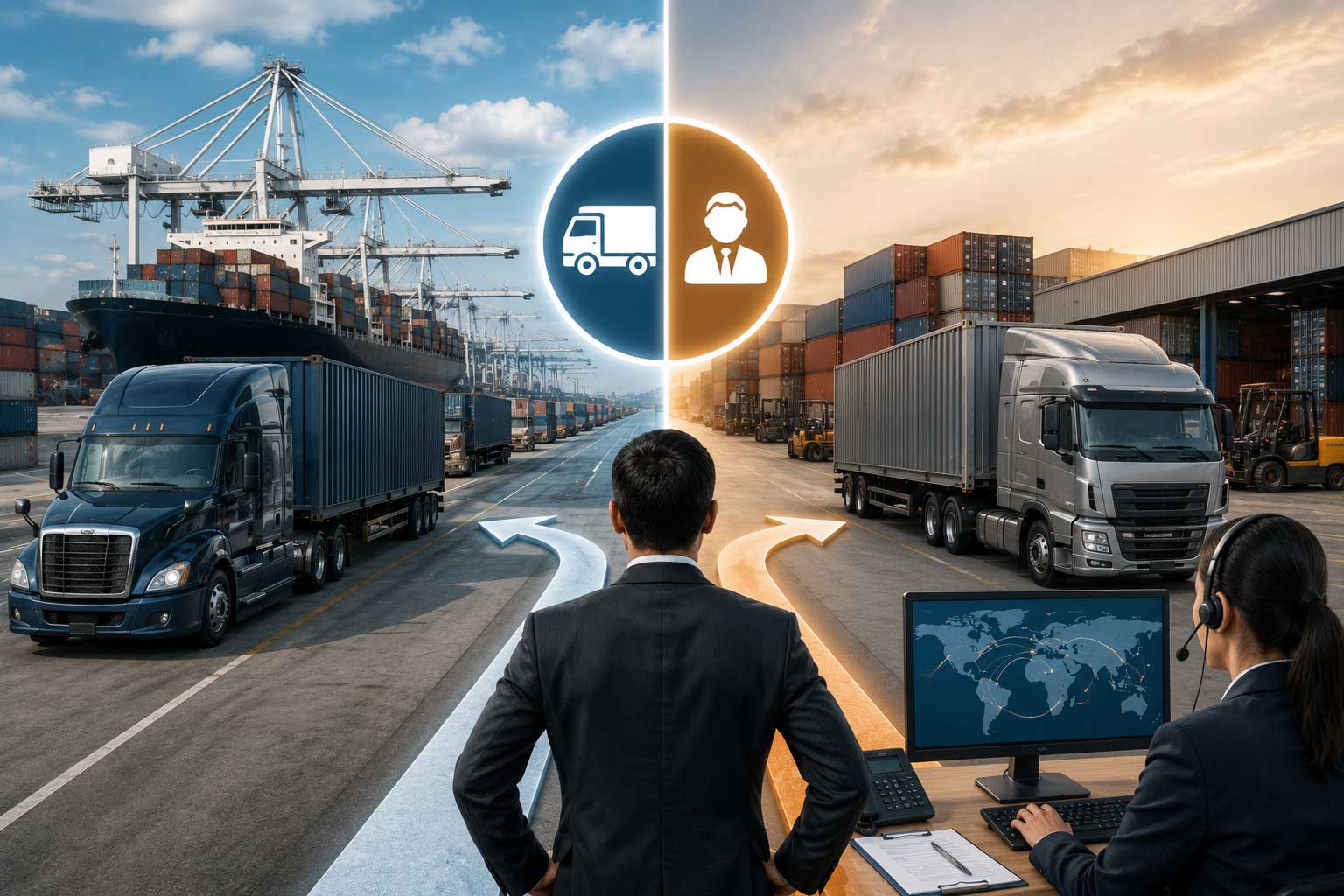
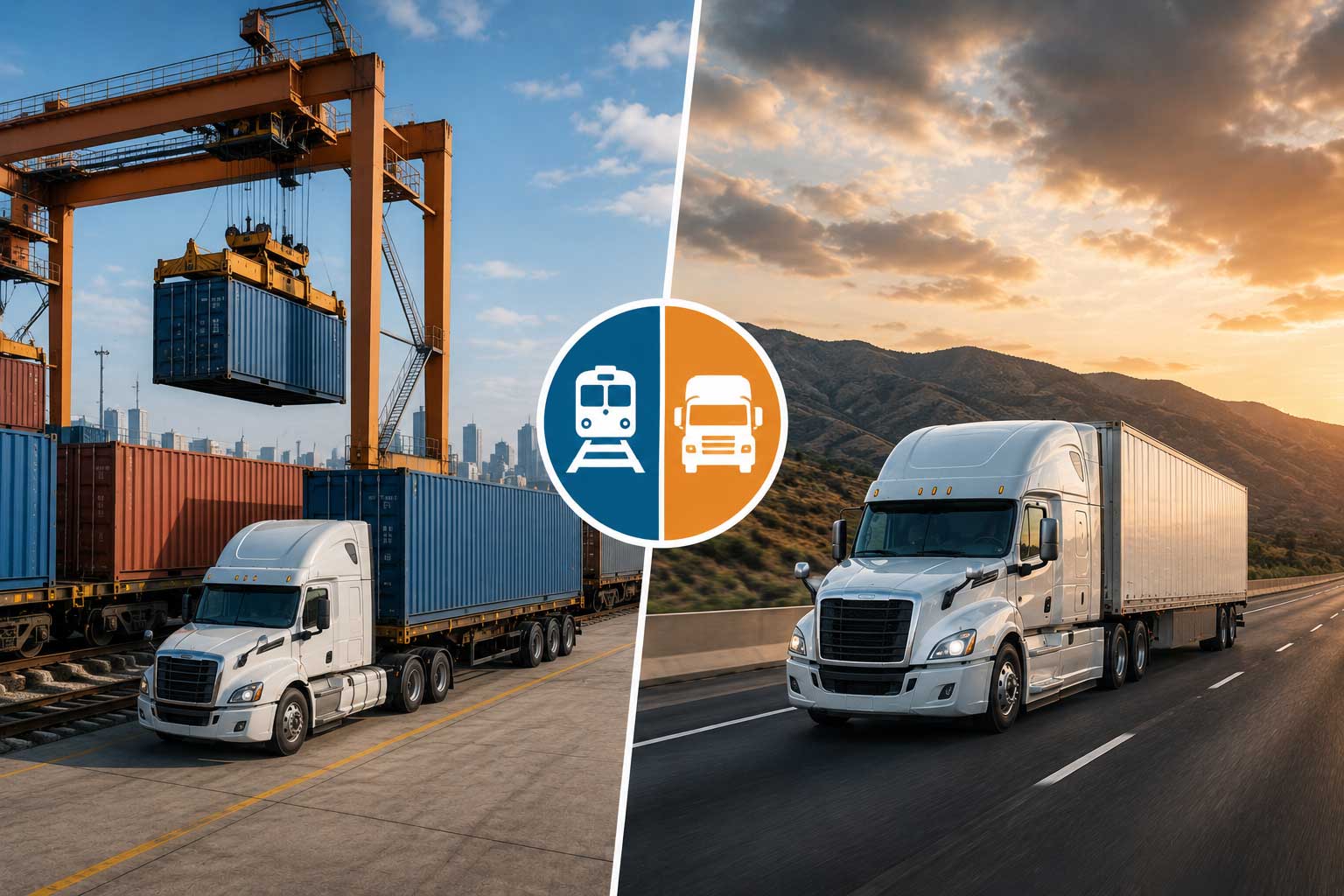
When moving freight across North America, shippers face a fundamental decision in their ground transportation strategy: intermodal drayage or traditional long-haul trucking.
While both modes rely on heavy-duty semi-trucks to move goods over highways, their operational structures, transit distances, cost profiles, and roles in the supply chain are drastically different. For supply chain managers looking to optimize transit times and curb freight spend, understanding these differences is essential.
Here is a clear breakdown of how intermodal drayage compares to traditional long-haul trucking, and how to determine which service best suits your lanes.
Defining the Modes
1. Intermodal Drayage: The First and Last Mile
Intermodal drayage refers to the short-haul transport of freight containers over short distances—typically connecting a ocean port, river terminal, or rail ramp to an inland warehouse or distribution center.
- The Core Function: Drayage serves as the essential “bridge” that connects ocean vessels or freight trains to road transportation networks.
- Transit Distance: Usually short-haul, ranging from a few miles up to a 100- to 150-mile radius around a port or rail terminal. Drivers typically complete their runs and return home on the same day.
- Equipment: Uses standardized intermodal shipping containers (20′, 40′, or 53′ ISO units) mounted onto specialized steel chassis trailers.
2. Traditional Trucking: Door-to-Door Long-Haul
Traditional trucking (often referred to as Over-the-Road or OTR trucking) involves moving freight entirely by road from origin to destination inside a single trailer, without transferring the cargo or container to another mode of transport.
- The Core Function: Direct, door-to-door point-A to point-B road transportation.
- Transit Distance: Medium- to long-haul, ranging from a few hundred miles to cross-country routes spanning thousands of miles. Drivers often spend days or weeks on the road.
- Equipment: Standard 53′ dry vans, refrigerated trailers (“reefers”), or flatbeds attached directly to a tractor unit.
Head-to-Head Comparison
| Feature | Intermodal Drayage | Traditional Trucking (OTR) |
| Primary Route Distance | Short-haul (10 to 150 miles) | Medium to Long-haul (300+ miles) |
| Transport Medium | Multi-modal (Truck + Rail/Ship) | Single-mode (Truck only) |
| Transit Speed | Variable (dependent on port/rail terminal clearance) | Fast, direct door-to-door transit |
| Driver Schedule | Local; daily home time for drivers | Regional/National; multi-day over-the-road routes |
| Environmental Impact | Lower carbon footprint per ton-mile (when paired with rail) | Higher fuel consumption and emissions per unit of freight |
| Cost Structure | Cost-effective for long distances (via rail), but subject to terminal fees | Higher fuel and labor costs for long distances |
Key Differences Breakdown
1. Operational Complexity & Hand-offs
- Traditional Trucking is straightforward: a driver docks at your facility, loads the trailer, drives directly to the receiver, and unloads. There are no middle-mile hand-offs.
- Intermodal Drayage is part of a relay system. A drayage driver picks up a container at a port or rail ramp, drops it at a local facility, and the container may later return to a rail car or cargo ship. This requires navigating port gates, appointment scheduling systems, and chassis management.
2. Cost Dynamics & Distance Thresholds
- When Traditional Trucking Wins: For shipments moving under 300 to 500 miles, traditional trucking is almost always faster and more cost-effective. The administrative overhead and handling steps of intermodal transport rarely pay off over short distances.
- When Intermodal Drayage Wins: For freight traveling over 500 miles, combining drayage with rail intermodal transport offers significant savings. Railroads can move one ton of freight over 400 miles on a single gallon of fuel, drastically lowering the long-haul cost compared to OTR trucking.
3. Equipment & Handling
In traditional trucking, the trailer remains attached to the tractor or sits parked in a distribution dock. In intermodal drayage, containers are routinely lifted by massive gantry cranes between ships, trains, and chassis. Because of this, goods shipped via intermodal drayage must be blocked, braced, and packed securely to withstand multi-modal handling forces.
Which Option Should You Choose?
Choose Intermodal Drayage (with Rail/Ocean) If:
- You are moving freight over long distances (500+ miles).
- Your shipping schedule allows for slightly longer transit windows in exchange for major cost savings.
- Reducing your carbon footprint and lowering fuel surcharges are top priorities.
- You regularly import or export cargo via ocean ports or inland rail ramps.
Choose Traditional Trucking If:
- Your shipments are time-sensitive or require guaranteed direct delivery.
- You are shipping freight across shorter regional distances (under 400 miles).
- Your freight requires specialized, non-standard handling (e.g., flatbed oversize cargo).
- You want to avoid terminal dwell times and potential port congestion delays.
Final Thoughts
Intermodal drayage and traditional trucking aren’t necessarily competitors—they are complementary components of a healthy logistics network. By leveraging traditional trucking for fast, short-to-medium haul lanes and combining intermodal drayage with rail for long-haul routes, shippers can build a balanced supply chain that maximizes speed while minimizing transport costs.